



ECLAC and OECD Launch Latin America Economic Outlook 2026 Highlighting Green Tech and Critical Minerals
The United Nations Economic Commission for Latin America and the Caribbean, together with the OECD and CAF, unveiled the 'Latin American Economic Outlook 2026', urging policymakers to leverage the region's vast green energy and critical mineral endowment to escape low-growth stagnation.





 ECONOMY
A transformative blueprint for continental development took center stage on November 5, 2026, as the United Nations Economic Commission for Latin America and the Caribbean (ECLAC), the Organisation for Economic Co-operation and Development (OECD), and CAF – Development Bank of Latin America and the Caribbean unveiled the comprehensive 'Latin American Economic Outlook 2026'. Presented during high-level ministerial briefings on the sidelines of international economic forums, the 280-page analytical dossier challenges sovereign governments across the region to dismantle historic protectionist barriers and establish unified regional industrial compacts capable of capitalizing on global clean energy and artificial intelligence manufacturing demands.
The report projects aggregate regional gross domestic product expansion to settle at a resilient 2.6 percent for the 2026–2027 fiscal cycle, outperforming earlier baseline predictions but remaining constrained by structural productivity gaps, informal labor persistence, and fragmented intra-regional logistics. However, authors identify an historic, once-in-a-generation window of structural transformation centered upon the planet's accelerated transition toward green industrialization and artificial intelligence infrastructure. Latin America holds more than half of the world's direct lithium reserves, over thirty-five percent of global copper reserves, and the planet's highest share of renewable electrical generation potential from solar, hydroelectric, and wind resources.
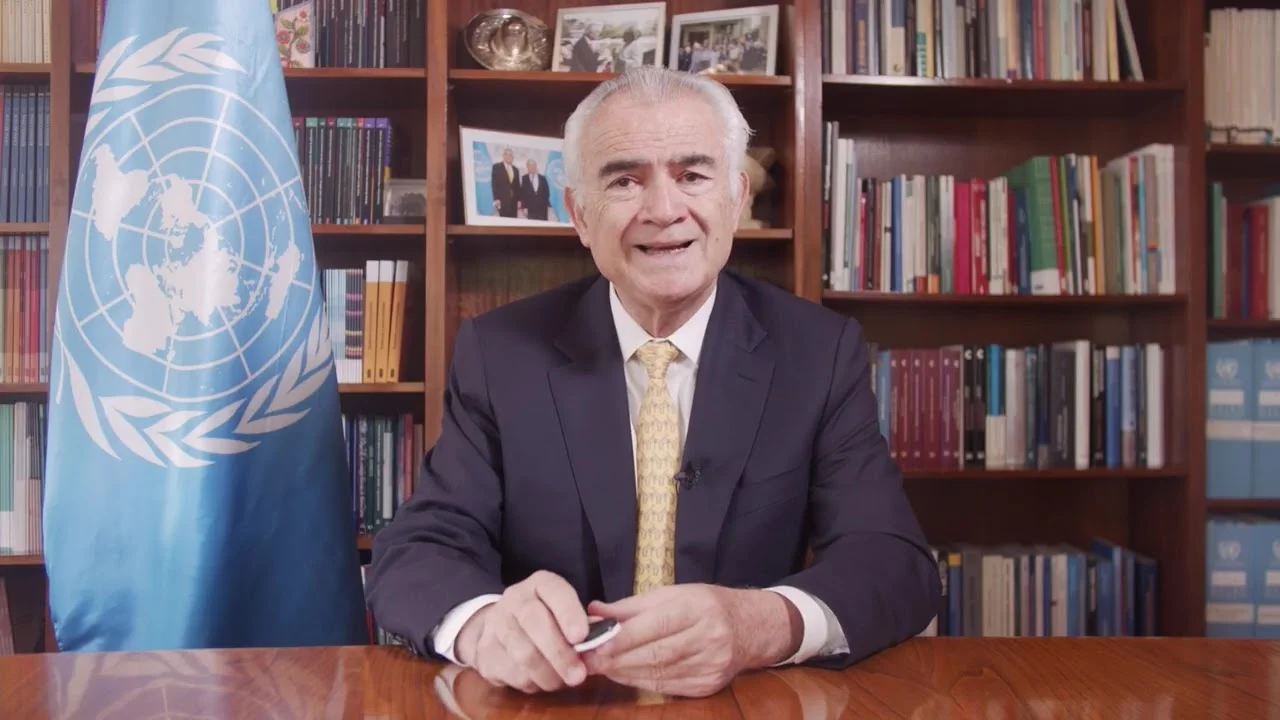
'Latin America and the Caribbean cannot afford to repeat the historic resource-curse cycles of centuries past by remaining passive suppliers of unrefined raw materials to overseas industrial centers,' declared ECLAC Executive Secretary José Manuel Salazar-Xirinachs during the keynote launch presentation. 'Our mandate for 2026 and beyond is value addition: manufacturing battery components, establishing certified low-carbon green steel smelters, refining specialized battery-grade lithium carbonate domestically, and powering next-generation artificial intelligence computing architectures with Latin America's abundant renewable kilowatts.'
The joint study highlights exemplary cross-border industrial integration currently taking shape in the Southern Cone and Central America. Joint energy corridors between Brazil, Paraguay, and Chile, alongside integrated lithium processing frameworks uniting Argentina and Bolivia, are demonstrated to generate up to four times more high-wage engineering and technical employment than traditional raw extractivism. Furthermore, the report provides concrete roadmap recommendations for harmonizing carbon accounting methodologies, creating hemispheric green taxonomy registries, and establishing unified public-private investment guarantees to de-risk clean tech mega-projects.
Addressing fiscal realities, the OECD Development Centre emphasized that regional public debt-to-GDP ratios have largely stabilized following three years of post-inflationary central bank vigilance. However, the report cautions that public spending on research, development, and advanced technological education remains critically deficient at less than 0.8 percent of GDP region-wide, compared to over 2.7 percent in advanced OECD economies. Multilateral leaders called upon sovereign wealth managers, private equity funds, and multilateral lenders to mobilize catalytic green bond instruments to bridge this innovation gap.
As international corporations accelerate nearshoring reconfigurations to diversify production outside of single-geography vulnerabilities, the Latin American Economic Outlook 2026 delivers an authoritative, evidence-based mandate: regional solidarity and sustainable technological value chains represent the only definitive pathway toward inclusive prosperity and long-term economic autonomy.
Analyzes political developments, elections, and government policy with in-depth reporting.
Just for You
 ECONOMY
Central Bank of Brazil Intervenes in Spot Currency Market as Latin American Foreign Exchange Slumps
Confronting sharp volatility driven by rising global interest rate expectations, the Central Bank of Brazil ex…
 ECONOMY
ECLAC Social Panorama 2026 Report Warns Rapid Aging and Labor Informality Threaten Regional Pension Solvency
Releasing its flagship Social Panorama of Latin America 2026 in Santiago on November 19, the United Nations Ec…
 ECONOMY
World Bank Approves Landmark 30 Million Dollar Carbon Market Operation for Ecuador Under Paris Agreement
In a pioneering climate finance milestone on November 18, 2026, the World Bank Group approved a $30 million op…
 ECONOMY
Latin American Mining Leaders Forge Strategic Regional Minerals Observatory at Washington Summit
At the high-level Americas Critical Minerals Leadership Summit in Washington, D.C., on November 16–17, 2026, L…
Comments (0)
Sign in or create an account to leave a comment.