



IMF Regional Outlook Warns Latin America Must Modernize Fiscal Frameworks to Navigate Global Market Volatility
The IMF's regional economic report released on October 18, 2026, forecasts 2.2% growth for Latin America, urging governments to execute structural fiscal reforms to withstand global debt pressures.





 ECONOMY
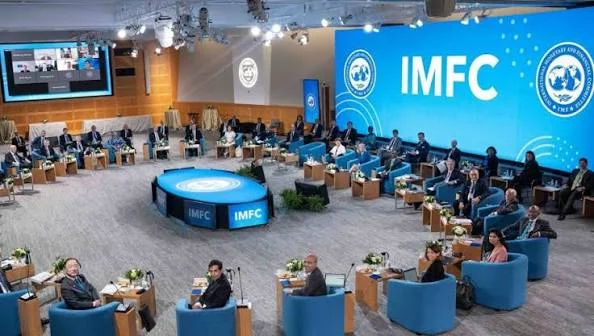
As sovereign finance ministers, central bank governors, and global institutional investors gather for multilateral financial consultations heading into late October 2026, the International Monetary Fund (IMF) officially released its comprehensive Regional Economic Outlook for Latin America and the Caribbean on October 18, 2026, projecting stable yet moderate regional growth of 2.1 to 2.3 percent while issuing an urgent call for structural tax modernization and fiscal consolidation.
The Washington-based multilateral lender’s flagship report emphasizes that while Latin America’s central banks have achieved world-class monetary credibility by driving median headline inflation down to historic targets around 3.5 percent, the macroeconomic burden has shifted decisively onto sovereign treasuries. Constrained by rigid constitutional spending mandates, climbing sovereign debt refinancing costs, and heightened currency volatility against the US dollar, regional governments face narrowed fiscal headroom just as global demand for sovereign debt becomes more selective.
In South America’s two largest economies, Brazil and Mexico, the report notes that projected annual growth rates of 2.1 percent and 1.4 percent will remain constrained unless incoming administrations implement credible fiscal adjustment guardrails. In Brazil, public debt approaching 79 percent of GDP has heightened sovereign yield spreads ahead of the climactic October 25 presidential runoff, while in Mexico, widening primary deficits demand comprehensive tax base expansions to support ongoing public infrastructure investments.
Divergence in Growth: Andean Dynamism vs. Traditional Heavyweights
In sharp contrast to the moderate pace of the region’s traditional economic behemoths, a dynamic group of structural reformers is outperforming global benchmarks. The IMF highlighted Paraguay, the Dominican Republic, and Panama as standout regional economic engines expanding between 4.2 and 4.8 percent, driven by massive private agribusiness logistics, deregulated corporate services, and sustainable infrastructure concessions.
"Latin America has demonstrated remarkable macroeconomic maturity in defeating the inflationary surge of past years," remarked Rodrigo Valdés, Director of the IMF's Western Hemisphere Department, during an executive symposium in Washington. "However, monetary policy cannot carry the mantle of structural transformation alone. To unlock productivity and generate high-quality formal employment, regional governments must implement disciplined fiscal frameworks, eliminate distortionary business subsidies, and provide legal predictability for private capital."
The report dedicated extensive analysis to the strategic commercial opportunities unlocked by the global clean energy transition, noting that the continent’s dominance in copper, lithium, and hydroelectric generation positions it as an indispensable partner for North American, European, and Asian supply chain nearshoring.
Attracting Greenfield Capital and Guarding Against Protectionism
The IMF stressed that attracting long-term foreign direct investment (FDI) into mineral refining, green hydrogen, and digital transport infrastructure requires transparent, stable regulatory regimes rather than sudden resource nationalism. The institution cautioned that escalating geopolitical fragmentation and potential protectionist trade barriers in key destination markets pose ongoing downside risks to Latin American commodity exports.
Concluding its regional assessment, the IMF urged Latin American finance ministries to leverage current exchange rate stability to rebuild fiscal buffers, enhance social safety net targeting, and accelerate investments in educational human capital, ensuring that the region navigates future global macroeconomic headwinds from a foundation of sovereign resilience.
Covers macroeconomic trends, financial markets, and global economic policy developments.
Just for You
 ECONOMY
Central Bank of Brazil Intervenes in Spot Currency Market as Latin American Foreign Exchange Slumps
Confronting sharp volatility driven by rising global interest rate expectations, the Central Bank of Brazil ex…
 ECONOMY
ECLAC Social Panorama 2026 Report Warns Rapid Aging and Labor Informality Threaten Regional Pension Solvency
Releasing its flagship Social Panorama of Latin America 2026 in Santiago on November 19, the United Nations Ec…
 ECONOMY
World Bank Approves Landmark 30 Million Dollar Carbon Market Operation for Ecuador Under Paris Agreement
In a pioneering climate finance milestone on November 18, 2026, the World Bank Group approved a $30 million op…
 ECONOMY
Latin American Mining Leaders Forge Strategic Regional Minerals Observatory at Washington Summit
At the high-level Americas Critical Minerals Leadership Summit in Washington, D.C., on November 16–17, 2026, L…
Comments (0)
Sign in or create an account to leave a comment.