



Pan American Health Organization Validates Chile as First South American Nation to Eliminate Dog-Mediated Rabies
PAHO and WHO officially certified on September 29, 2026, that Chile has eliminated dog-transmitted rabies, becoming the first South American nation to achieve this historic public health milestone.





 WORLD
WORLDIn a historic public health milestone celebrated by international veterinary epidemiologists, healthcare ministers, and global disease monitoring agencies, the Pan American Health Organization (PAHO) and the World Health Organization (WHO) formally validated on September 29, 2026, that Chile has successfully eliminated human rabies transmitted by dogs as a public health problem, making it the very first nation in South America to achieve this landmark global certification.
The prestigious validation ceremony took place at the headquarters of Chile's Ministry of Health in Santiago, attended by PAHO Director Dr. Jarbas Barbosa, Chilean Minister of Health Ximena Aguilera, and leading regional representatives of the World Organisation for Animal Health (WOAH). The official international certification recognizes decades of rigorous epidemiological surveillance, widespread mass canine vaccination campaigns, synchronized cross-border border control protocols, and comprehensive public education programs that systematically extinguished viral transmission chains between domestic animals and human populations across all Chilean administrative regions.
Rabies is one of the world's oldest and deadliest zoonotic viral pathogens, carrying a near-100 percent case fatality rate once clinical neurological symptoms appear. Across Latin America, dog-mediated rabies historically caused thousands of tragic human deaths annually throughout the twentieth century, disproportionately affecting vulnerable rural populations and peri-urban settlements with limited access to immediate post-exposure prophylaxis (PEP).
Decades of Coordinated One Health Strategy Yield Historic Success
Chile's triumph is the culmination of an integrated "One Health" framework—an interdisciplinary operational strategy that bridges human clinical medicine, veterinary public health, and municipal environmental management. Chilean health authorities have maintained uninterrupted nationwide canine immunization coverage exceeding 80 percent of the susceptible dog population for more than fifteen consecutive years, while operating state-of-the-art diagnostic molecular laboratories capable of rapid genetic sequencing of viral samples collected from wildlife reservoirs such as bats.
"Chile's achievement serves as an inspiring beacon of hope, scientific discipline, and public health commitment for the entire Western Hemisphere," stated PAHO Director Dr. Jarbas Barbosa during the presentation of the official elimination certificate. "Eliminating dog-transmitted rabies demonstrates what is possible when governments commit sustained budgetary resources, engage local communities directly, and coordinate human and animal health authorities under a unified One Health mandate. Today, Chile proves to the world that ancient neglected tropical diseases can be permanently overcome."
Chilean Minister of Health Ximena Aguilera dedicated the recognition to generations of primary healthcare workers, municipal veterinarians, and municipal animal welfare volunteers who conducted door-to-door vaccination campaigns from the arid northern Atacama communities to the southern Patagonian fjords.
Catalyzing Disease Elimination Benchmarks Across the Americas
The elimination in Chile aligns directly with the PAHO Elimination Initiative, an ambitious hemispheric roadmap aiming to extinguish more than thirty communicable diseases and related environmental health hazards across the Americas before 2030. Public health experts observe that Chile's rigorous epidemiological tracking models will serve as a template for neighboring Andean and Southern Cone nations working to eliminate residual localized transmission clusters.
While celebrating the milestone, health authorities stressed that active epidemiological vigil will continue unabated, with free post-exposure rabies biologics remaining permanently stocked in every regional hospital network to treat potential exposures to wild mammal vectors, ensuring that Chile’s historic epidemiological victory remains permanent for generations to come.
Focuses on international relations, global trade, and geopolitical developments.

Just for You
 WORLD
WORLDLatin American Business Travel Spending Surges Toward Record $67.7 Billion Amid Regional Corporate Expansion
Business travel spending in Latin America is forecast to hit a record $67.7 billion in 2026, an 11% annual inc…
 WORLD
WORLDUnited States Revokes Visas for 27 Latin American Officials Under Shield of the Americas Anti-Corruption Mandate
The U.S. State Department revoked visas for 27 Latin American officials and family members from Bolivia, Colom…
 WORLD
WORLDEighteen Suspects in Jovenel Moïse Assassination Extradited to United States as Judicial Cooperation Expands
Eighteen key suspects in the 2021 assassination of Haitian President Jovenel Moïse were extradited to the Unit…
 WORLD
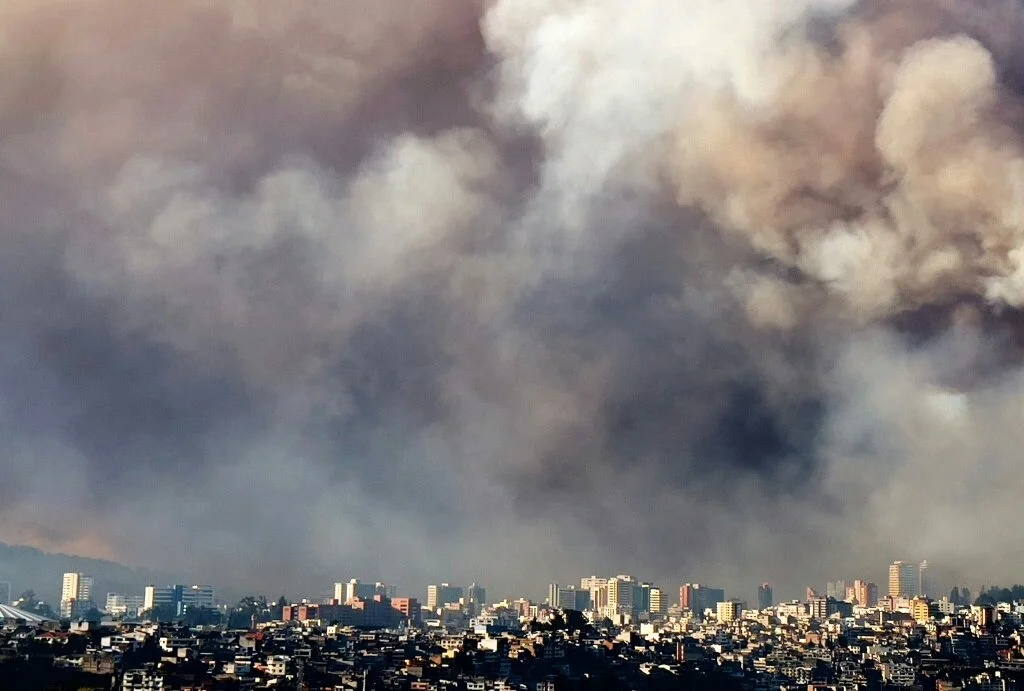
WORLDFierce Wildfires Encroach on Quito as Firefighters and Residents Battle Blazes Across Ecuador Capital
Emergency crews and local residents are battling ferocious forest fires threatening residential neighborhoods …
Comments (0)
Sign in or create an account to leave a comment.