



Latin American Mining Summit Warns Community Disputes and Regulatory Bottlenecks Stall Over $54 Billion in Capital Investments
A landmark mining report released on September 29, 2026, revealed that environmental permitting delays and community conflicts have stalled over $54 billion in Latin American mining projects.





 ECONOMY
As global demand for critical transition metals—such as copper, lithium, nickel, and rare earth elements—continues to surge worldwide, leading natural resource economists, sovereign finance ministers, and mining industry executives warned on September 29, 2026, that persistent "above-ground" risks, encompassing protracted environmental permitting delays, community water disputes, and jurisdictional uncertainties, have stalled or canceled more than $54 billion in major extraction and refining projects across Latin America over recent years.
The sobering economic findings, highlighted in an exhaustive multi-year analysis presented at the Latin American Natural Resources & Mining Investment Symposium in Santiago, Chile, emphasize a stark paradox confronting the continent's major mining jurisdictions. While Latin America commands over half of the planet’s known lithium reserves and more than 40 percent of global copper output, the average timeline required to advance an Andean mining project from initial mineral discovery to commercial production has widened to nearly fourteen years, prompting multinational mining conglomerates to reallocate exploration budgets toward competing jurisdictions in North America and Oceania.
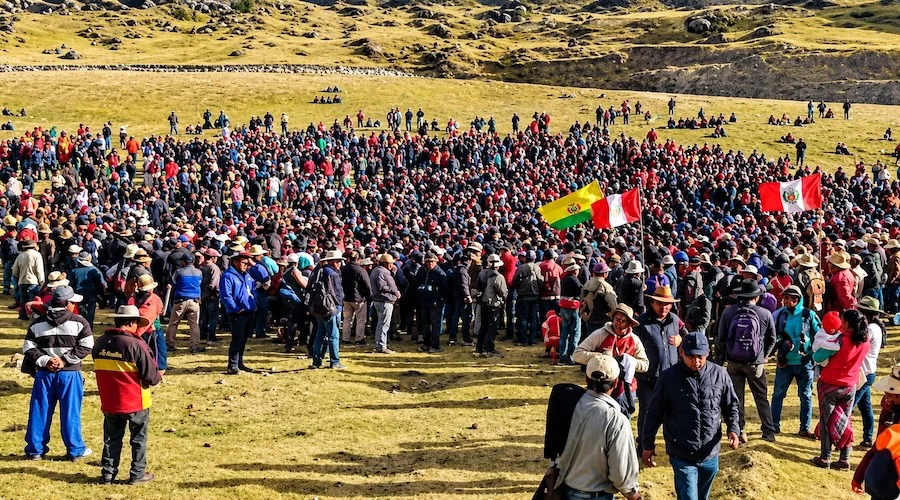
In Chile and Peru—the world’s two largest copper producers—mining federations pointed to overlapping regulatory oversight, complex consultation mandates with indigenous rural communities, and frequent blockade protests along strategic mineral transport highways, such as Peru’s Southern Mining Corridor, as primary drivers of capital expenditure deferrals.
Balancing Environmental Stewardship with Critical Mineral Supply
Industry analysts noted that the financial bottleneck comes at an inopportune moment for the global clean energy transition, which relies overwhelmingly on South American copper wiring for electric vehicle motors, offshore wind turbines, and continental grid expansion projects. With copper prices trading near historic highs, deferred projects represent billions in lost sovereign royalty revenues and employment opportunities for local Andean municipalities.
"The central dilemma facing Latin America's mining sector is no longer geological potential; it is institutional efficiency and social license," declared senior resource analyst Daniela Valenzuela during an executive panel in Santiago. "Mining enterprises must move beyond traditional philanthropic outreach and offer genuine shared-value partnerships, equitable water desalination infrastructure, and transparent ecological co-management with local populations. At the same time, regional governments must streamline duplicate bureaucratic permitting channels without compromising rigorous environmental standards."
Governments across the region are attempting to respond with institutional reforms. In Chile, the Ministry of Mining highlighted recent legislative proposals designed to shorten environmental impact review periods by 30 percent while expanding clean water desalination mandates for copper concentrators. In Peru, authorities have deployed permanent mediation taskforces to resolve localized water allocation grievances before they escalate into open-ended road closures.
Strategic Race for Downstream Value Addition and Refining
The symposium also addressed the pressing need for Latin American mining economies to move up the value chain from raw ore extraction to domestic processing, battery-grade chemical refining, and specialized metallurgy manufacturing. Bilateral trade envoys emphasized that regional cooperation through coordinated tax treaties and infrastructure corridors could transform South America into an integrated clean-tech manufacturing hub rather than merely an exporter of raw rocks.
As the international symposium concluded, participants affirmed that unlocking the continent's frozen pipeline of mining investments will require transparent governance, reliable rule of law, and uncompromising environmental stewardship, ensuring that the wealth extracted from the earth directly benefits the regional communities that safeguard it.
Covers macroeconomic trends, financial markets, and global economic policy developments.

Just for You
 ECONOMY
Argentina Launches Milestone 'Passports-for-Investment' Framework to Bolster Central Bank Foreign Reserves
Argentina enacted a landmark citizenship-for-investment decree on October 3, 2026, offering nationality for a …
 ECONOMY
Global Rating Agencies and Regional Banks Warn of Fiscal Adjustment Pressures Across Latin America Ahead of October Elections
International financial agencies and regional banks warned on September 28, 2026, that mounting public deficit…
 ECONOMY
Bolivian Congress Approves $1.9 Billion IMF Facility to Address Acute Foreign Currency Shortage
Bolivia's Congress has approved a crucial $1.9 billion IMF and multilateral financing package on September 19,…
 ECONOMY
Geely Rolls Out First Brazil-Manufactured Vehicle as Chinese EV Makers Surpass 25% Market Share
Geely has produced its first vehicle in Brazil as Chinese EV manufacturers capture over 25 percent of the coun…
Comments (0)
Sign in or create an account to leave a comment.