



Brazil Senate Approves Rare Earth Minerals Framework as Lula Seeks Greater Control Over Strategic Resources
Brazil’s Senate has approved new regulations for rare earth and critical minerals, aiming to attract investment, expand domestic processing and reduce reliance on foreign supply chains.





 ECONOMY
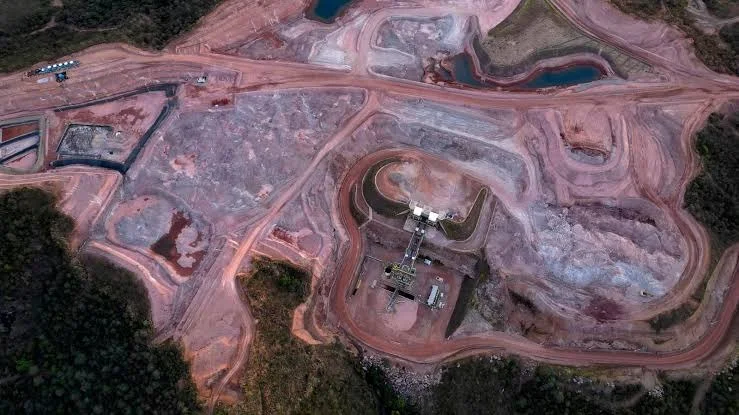
Brazil's Senate has passed a bill that will establish a new regulatory framework for the exploration and development of rare earth elements and other critical minerals, a major step in the country's ambitions to become a larger player in global supply chains. The bill now goes to President Luiz Inácio Lula da Silva, who has identified strategic minerals as central to Brazil’s industrial and economic strategy.
The legislation provides a plan to ramp up mineral exploration, increase domestic processing and attract investment into an industry that is becoming increasingly vital to the tech, renewable energy and defense sectors. Brazil holds some of the world’s largest rare earths reserves, but its share of the global market remains small compared to China, which dominates much of the mining, refining and processing industry.
The approved framework would also provide incentives to companies engaged in critical mineral projects including avenues for funding and tax benefits to encourage value addition in the country. The government has said Brazil needs to cut exports of raw materials and develop local industries to process the minerals within the country.
The law also sets up a National Council for the Industrialization of Critical and Strategic Minerals, further increasing the government’s involvement in the control of strategic investments and the decisions relating to key resources. The move was meant to protect the country’s interests and promote development of the industry in the long-term, officials said.
Rare Earths Now in Center of Global Competition
China’s move comes as countries across the world seek alternatives to China’s dominance of supply chains for critical minerals. The rare earths are key ingredients in everything from electric cars and renewable energy to sophisticated electronics and military hardware.
Brazil has big reserves, but has traditionally lacked the ability to process them on a large scale. “For a long time, a lot of value has been captured from minerals when the raw materials are leaving the country to be refined and manufactured overseas. “We cannot repeat the pattern of Brazil of exporting resources without building domestic industries around them,” President Lula said.
The new law is designed to address this problem by offering incentives for companies to establish processing plants in Brazil. Supporters say the policy could create jobs, boost industrial capacity and give Brazil more clout in global technology supply chains.
The legislation also arrives as the geopolitical rivalry between the U.S. and China heats up. Washington and other western economies are seeking alternative sources of critical minerals to reduce their dependence on Chinese supply chains that still dominate rare earth processing.
Brazil is playing neutral, courting investment from many countries instead of taking sides with one big power. Brazil wants partnerships that foster domestic development and retain control over strategic resources nationally, Lula has said.
The country’s ambitions to become a rare-earths powerhouse have caught the attention of companies worldwide looking for alternatives to supply chains dominated by China. Brazil’s role as a key player in the global minerals market will depend on its ability to increase its mining and processing capacity.
Talk on Investment Incentives and Environmental Issues
The new minerals framework includes financial incentives expected to incentivize exploration and processing projects. The law creates a Mineral Activity Guaranty Fund and provides tax incentives for companies that add value to resources in Brazil.
Activists say the measures could draw billions of dollars of investment into Brazil, transforming its mining industry into a more sophisticated industrial ecosystem. They say Brazil could do more with its mineral wealth to develop its own refining and manufacturing capacity.
But the legislation also has drawn fire from environmental groups and some industry representatives. Critics say environmental safeguards must be improved, or ecosystems and local communities could be at risk from mining operations.Some industry players have also expressed concerns about more government oversight. Supporters say the more stringent rules are in the national interest, but businesses warn that the red tape could slow investment and make projects harder to develop.
Brazil walks a tightrope between economic development and environmental promises. The country has mineral resources that could provide great economic rewards, but mine development has been a controversial issue, with fears over deforestation, indigenous rights and environmental damage.
Brazil will focus on sustainable development and seek to boost its share of critical mineral markets, the government said. Tighter regulations can ensure long-term benefits from mining operations and limit negative impacts, officials say.
Brazil: The Future Critical Metals Power House
A big step for Brazil to reinforce its position in the international economy The framework of rare-earth minerals bathed in a green glow. Electric cars, renewable technologies and advanced electronics are becoming more common, making critical minerals an increasingly important strategic asset for governments around the world.
The new rules are expected to help the Brazilian government turn the country from an exporter of raw materials to a big producer of processed minerals and advanced mineral-based products. This is consistent with Lula’s broader industrial policy objectives of boosting local manufacturing and technological development.
The move could have implications for Brazil's relations with major economic powers. The U.S. has sought to partner with Brazil to diversify critical mineral supply chains, but China remains a key trading partner. Brazil wants to keep its options open in the tussle between Washington and Beijing and is opening its mineral sector to more investment.
Success of the policy will depend on Brazil’s ability to attract investments, build refining capacity and preserve environmental protections. Infrastructure, technical expertise and stable regulations for large mineral projects often take years to develop.
Brazil’s rare earth strategy, if executed well, could reshape global mineral supply chains and raise its importance in the industries that will shape the future economy.
That’s the first step in the process, but the long-term impact depends on the government balancing industrial growth, foreign investment and environmental protection.
Covers macroeconomic trends, financial markets, and global economic policy developments.

Just for You
 ECONOMY
Argentina Launches Milestone 'Passports-for-Investment' Framework to Bolster Central Bank Foreign Reserves
Argentina enacted a landmark citizenship-for-investment decree on October 3, 2026, offering nationality for a …
 ECONOMY
Latin American Mining Summit Warns Community Disputes and Regulatory Bottlenecks Stall Over $54 Billion in Capital Investments
A landmark mining report released on September 29, 2026, revealed that environmental permitting delays and com…
 ECONOMY
Global Rating Agencies and Regional Banks Warn of Fiscal Adjustment Pressures Across Latin America Ahead of October Elections
International financial agencies and regional banks warned on September 28, 2026, that mounting public deficit…
 ECONOMY
Bolivian Congress Approves $1.9 Billion IMF Facility to Address Acute Foreign Currency Shortage
Bolivia's Congress has approved a crucial $1.9 billion IMF and multilateral financing package on September 19,…
Comments (0)
Sign in or create an account to leave a comment.